
After 2026, Thailand’s economy will enter a critical transition phase. Driven primarily by the Green Economy and the Digital Economy, this shift will impact business models, labor market structures, and the future skills demanded by organizations.
This transformation is not just about technology; it is about shifting the “business mindset” and “how people work” to align with a more fast-paced and sustainable world.
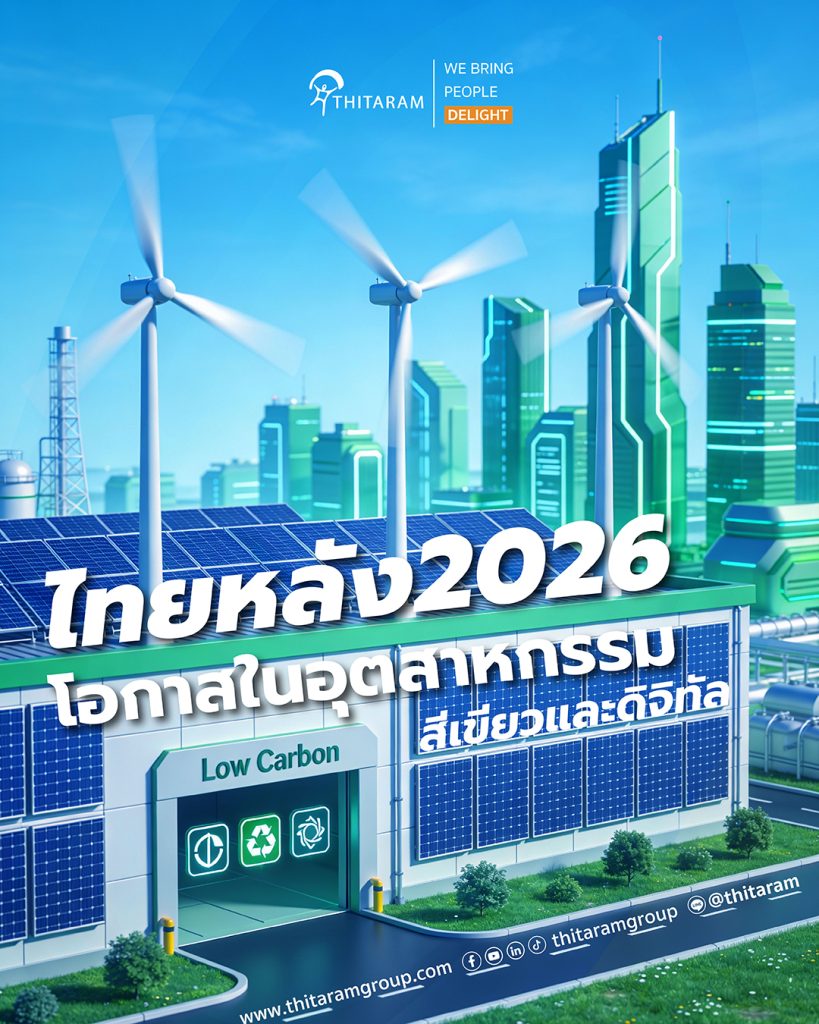
The Rise of the Green Economy: New Opportunities for Thai Industries
Sustainability is becoming a core standard of the global economy. This is driven by environmental regulations from international trading partners, foreign direct investments, and shifting consumer behaviors that prioritize eco-friendly products and services.
Consequently, Thailand is likely to see significant growth in renewable energy, electric vehicles (EVs), and sustainable food production. Businesses in manufacturing, logistics, and agriculture must optimize their operations for energy efficiency, carbon reduction, and transparent supply-chain traceability.
This trend will spike labor market demand for talent with Green Skills, such as energy management, clean energy system maintenance, environmental impact analysis, and ESG (Environmental, Social, and Governance) compliance.
The Digital Economy Will Reshape Business Competition in Thailand
Digital technology is becoming the foundation of every industry—from manufacturing, retail, and finance to services.
Organizations must increasingly adopt automation, data analytics, and digital tools into their operations to increase efficiency, reduce costs, and respond to rapidly changing customer demands.
Meanwhile, routine tasks will decline, while roles requiring analysis, problem-solving, and technology management will grow. To remain competitive, workers must develop Digital Literacy, AI utilization, and cybersecurity awareness.
The Future of the Thai Labor Market: Skills and Adaptability are Key
The growth of new industries and foreign investment will cause demand for high-skilled labor to skyrocket, while the supply of specialized talent may remain insufficient.
Therefore, organizations must plan for continuous employee upskilling while fostering flexible work models that encourage constant learning.
For workers, Lifelong Learning, technological skill development, communication, and adaptability will be the ultimate keys to unlocking job opportunities in this new economic era.
Conclusion
The Green and Digital economies will be the primary drivers of Thailand over the next 5 to 10 years. Organizations that begin adapting today—in terms of technology, operational processes, and human capital—will be better positioned to compete in a rapidly changing market.
In the post-2026 world, the speed of learning and adaptation will become the greatest competitive advantage for both organizations and workers.
(Note: The original text contained an incomplete sentence here: “Before deciding to hire PC employees, brand owners should check at least 12 important matters, including…”)
FAQ: Frequently Asked Questions About Thailand’s Economy Post-2026
How will Thailand’s economy change after 2026?
After 2026, Thailand’s economy will be increasingly driven by green industries and the digital economy. Businesses will integrate more technology into their operations, and the labor market will see a steady rise in demand for digital, engineering, and environmental management skills.
What is the Green Economy, and why is it important to Thailand?
The Green Economy is an economic development approach focused on sustainability, reducing environmental impacts, and efficient resource utilization. For Thailand, industries like renewable energy, electric vehicles (EVs), and eco-friendly manufacturing will serve as major catalysts for economic growth.
How does the Digital Economy affect Thai businesses?
The digital economy forces businesses to leverage technologies like automation, data analytics, and e-commerce to boost efficiency, lower costs, and keep up with rapidly changing consumer behaviors.
What skills should Thai workers possess in the future?
Workers should develop digital literacy, data analysis, and proficiency in AI and automation tools. Additionally, sustainability skills—such as energy management and environmental compliance—are crucial to securing job opportunities in emerging industries.
How should organizations prepare to compete in this new economic era?
Organizations should invest in core digital infrastructure, commit to continuous employee upskilling, and build more flexible work environments to effectively navigate future technological shifts and labor market changes.