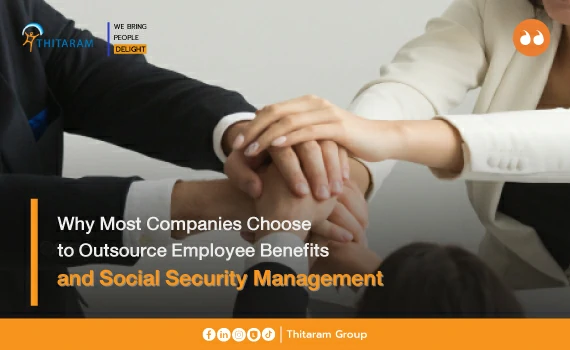
Managing employee benefits and social security is one of HR’s most important responsibilities—but it is also a function that requires high accuracy, constant monitoring of legal updates, and the monthly handling of significant documentation. Many organizations have found that managing these tasks internally places a heavy burden on their HR teams and increases the risk of errors that directly affect employees. As a result, businesses are turning to HR Outsourcing for benefits and social security management, allowing experts to handle all processes professionally and efficiently.
1. Reduced Legal Risks in Labor Law and Social Security Compliance
Labor laws and social security regulations are frequently updated—covering areas such as:
- Contribution rates
- Maternity leave rules
- Sick leave entitlements
- Employee benefits
- e-Service document submissions
If a company fails to comply correctly, it may face penalties or employee-related issues. Outsourcing providers, who work exclusively in this field, stay updated on all regulatory changes. This ensures every task is completed correctly and in full compliance with legal requirements.
2. Fewer Errors and Greater Accuracy in Daily Operations
Tasks related to benefits and social security—such as adding or removing insured employees, submitting contributions, calculating compensation, or filing benefit claims—require precise information and multiple verification steps. When performed manually or by non-specialists, errors can easily occur and directly impact employee satisfaction. Outsourcing helps establish a more systematic workflow, significantly reducing human errors and improving the accuracy of all related processes.
3. Lower Operational Costs and More Efficient Use of Resources
For organizations with a large employee base, internal HR teams spend substantial time and resources managing benefits and social security, including: HR staff salaries
- Overtime costs
- Training expenses
- Software or system fees
4. More Time for HR to Focus on High-Value Strategic Work
Benefits and social security tasks involve extensive monthly routines, such as verifying documents, submitting reports, managing entitlements, and responding to employee inquiries. When HR must handle all of this alone, they may have less time for strategic responsibilities such as:
- Employee development
- Workforce planning
- Organizational culture initiatives
5. A Standardized System and Continuous Support From Specialists
Outsourced providers typically use well-structured data management systems and assign multiple team members to each account. This ensures workflow continuity even if there are internal staffing changes. Employees also benefit from clearer and more consistent support, including:
- Claim procedures
- Required documents
- Sick leave submissions
- Social security forms
Conclusion
Outsourcing employee benefits and social security management is a safe, cost-effective choice for organizations seeking to reduce risks, improve accuracy, and free HR teams for more strategic responsibilities. If your company needs a professional and reliable benefits management system, Thitaram Group is ready to support every step—from start to finish.